Forest’s Flower Institute – or The Flor da Floresta Institute is a non-profit and Non-Governmental-Organization (NGO) located in Jordão, Acre, Brazil, in the western interior of the Amazon Forest. Our main goal is to promote integral planetary health, aiming to achieve it by promoting human health, ecological education, both food security and sovereignty, and the preservation of Amazon Forest together with the empowerment of women and indigenous Brazilian culture.
Currently, Forest´s Flower Institute develops lots of projects that address positive great impact for the population living in the municipality of Jordão and people all over the world.
Our Impact: Health promoted, Seeds Planted, Environment Transformed
Since our first steps as a team in the forest in 2020, and our official establishment as a Civil Society Organization (NGO) in 2021, Instituto Flor da Floresta has turned support into tangible results. Through the trust of our partners and donors, we have successfully raised over R$ 3 million in investments, strategically directed towards healthcare, education, basic sanitation, and environmental preservation.
Our on-the-ground presence is reflected in numbers that tell stories of life, dignity, and respect for ancestral wisdom:
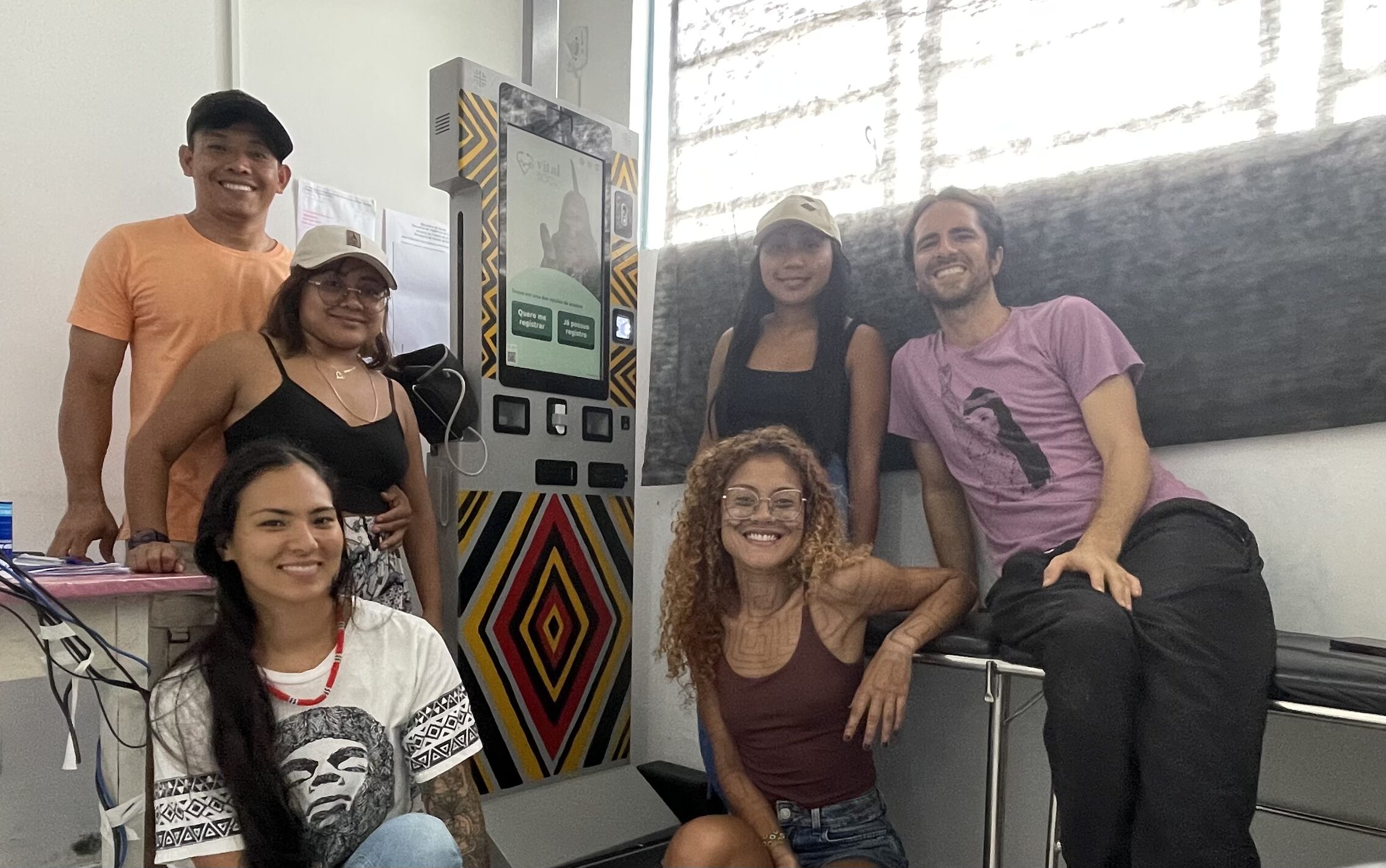
Health & Well-being: We have conducted over 50,000 medical consultations across various specialties. We provided over R$ 150,000.00 in donated medicines, carefully integrating allopathic treatments with herbal medicine. To overcome geographical barriers, we implemented 3 digital telehealth units in remote communities.
Education & Ancestral Knowledge: We built 3 and renovated 2 school-laboratories. These facilities are designed to serve as bridges, seamlessly blending the traditional knowledge of the forest with modern technology.
Sanitation & Environment: Our growhouse has already grown and planted more than 1.500 vegetable specimes, between medicinal, food and threes. Also we have installed 6 water harvesting and ecological sanitation systems, ensuring basic human dignity, disease prevention, and harmony with the local ecosystem.
Culture & Global Connection: We hosted over 10 transdisciplinary cultural and health immersions in the villages, bringing together Indigenous peoples and participants from all over the world for a profound exchange of knowledge.
About Jordão and its inhabitants
The Huni Kuin people: Guardians of the Forest and Ancestry
The Huni Kuin people – also known as Kaxinawá – carry a deep and sacred tradition, linked to the spirits of the Forest and the teachings that are passed down from generation to generation. Part of the “Pano” linguistic trunk, these original people from regions where today Acre and Peru are located, keep in their cultural and ritual practices, the essence of a deep connection with nature and with the ancestors who taught the value of the land, water and community life. In the municipality of Jordão, this people inhabit “the Huni Kuin Indigenous Land of the Jordão River”, which is home to 33 hamlets, and “the Huni Kuin Indigenous Land of the Tarauacá River”, where there are five more hamlets. Despite the cultural richness they possess and the value of their contribution to Forest conservation, the Huni Kuin face challenges that often threaten their basic right to dignity. Access to drinking water, food, energy and health care is limited and precarious – even though their traditional medicine practices are of immense value to all humanity, the globalized health practices that generally solves the basic needs of people are not available in their daily life. According to a report from the DSEI Alto Rio Juruá, there are approximately 3,845 Huni Kuin cared for by the health team, but this assistance is insufficient given their daily and urgent needs. Still, the resilience of the Huni Kuin people inspires a silent but powerful struggle. The world begins to trust and celebrate the depth of its culture, and Huni Kuin artists share their stories, music, medicine and crafts at festivals, museums and acclaimed events around the world. Through their art, they express not only their beauty, their resistance, but also their hope: that one day the value of their culture will be fully recognized and valued, and that the protection of their territory and rights will be guaranteed.
Our purpose
Faced with this reality, our organization acts with dedication and respect in order to value and support the indigenous and riverside communities of the Jordão region. We recognize the importance of protecting not only environmental wealth, but also the cultural and spiritual heritage of the local people. With a special focus on caring for flowers and native women, we believe that preserving the Forest walks together with respecting human rights. We also believe that the strength of Jordão lies in its diversity and its people fighting spirit. Our mission is to collaborate with the sustainable and cultural development of these communities, generating actions that respect their traditions and strengthen their autonomy, trying as far as possible to bring harmony between the diverse local inhabitants. Another point of our mission focus is to promote comprehensive, egalitarian, transcultural and transdisciplinary health and education.
The Riverside Amazon People: resistance and silent struggle on the banks of the Jordão river
The riverside population of Jordão is made up of descendants of a mixture of local indigenous people – such as the Huni Kuin, Papavô and Ashaninka – and people from the Brazilian Northeast region (Nordestinos) who arrived in the Amazon Forest as rubber soldiers, mostly coming from the state of Ceará and other arid surrounding areas – which by their turn are formed by a mixture between Europeans, Africans and north-eastern Brazilian indigenous people, such as the Kariri and the Tupinambá, among others. These settlers – mixed with the local indigenous culture – faced the harshness of the rubber plantations and today – decades later – they still live a subsistence life intersected by poverty and social vulnerability. They are survivors of a past of exploitation and marginalization. Whether on one hand they enjoy a deep connection with the Forest and the great wealth of living in a guaranteed spacious territory with plenty of water, green areas, fertile soil, hunting and fishing offer, on the other hand they are still living in the margins of society, between isolation and the lack of study and work opportunities. Riverine culture in Jordão is a rich fusion of indigenous, African and European heritages built from encounters – often violent – with local people. However, these riverside people do not have the same international cultural and legal recognition as indigenous people, although they share the same vulnerabilities. Deprived of the support and rights granted to indigenous peoples, riverside dwellers struggle to preserve their territory and identity in an environment that often sees them as invisible. Even though this population carries a unique and valuable cultural heritage, by considering the complexity of their local and global context, we believe that they could benefit greatly from support to empower themselves, to value their roots and to enjoy the security and dignity that are owed to them.
The Jordão village: the resilient heart of the Amazon rainforest
Jordão is a hidden joy in the Amazon, a municipality rooted in the heart of Acre State, in the far north of Brazil. It is a land of incomparable natural beauty, where rivers meander through dense majestic forests and the rich biodiversity persists, resisting the challenges of modernity. However, maintaining this resistance is not an easy task. The beauty of Jordão is as big as its difficulties caused by geographical isolation. People can only reach the village through river or by small airplanes. The access by boats gets more difficult in periods of drought while the flights are rare – operated only a few times a week. This isolation is always a challenge since it shapes every aspect of daily life, from access to supplies to globalized development opportunities of its population. The native inhabitants of Jordão are a vibrant mix of riverside and indigenous communities, mainly the Huni Kuin people, who keep the culture and spirituality of their ancestors alive in a dance of traditions, languages, music and festivals. Amid more than 30 villages, the Huni Kuin heritage pulses, attracting those seeking wisdom, integral health and connection with nature. Still, this cultural and environmental heritage faces constant threats, the fight to preserve its identity and its territory is a daily battle. Founded in 1992, Jordão has an economy based on family farming and extractivism, with tourism gradually gaining ground. Even so, despite efforts on the part of the community to improve social indicators, the municipality still faces significant challenges. The people of Jordão try to maintain the environmental preservation and also to improve their living conditions. Education, sanitation and access to healthcare are some topics that need to be improved. Some other critical problems its inhabitants need to confront are the high level of alcoholism and malnutrition together with the most diverse types of social violence, especially that aimed at women.
A glimpse of the
region's beauties
[controles-navegacao2]
About the Directors
Dra. Marcela Thiemi Andrade Korogi
Physician with a degree in Medicine from the Federal University of Minas Gerais (UFMG), graduated in 2015. She practiced in Belo Horizonte in private practice and provided home care, focusing on a compassionate approach to chronic-degenerative diseases, aging, and end-of-life support. Currently, she specializes in Integrative and Functional Medicine, offering teleconsultations throughout Brazil and internationally. In Jordão, where she resides, she serves as a physician at the Basic Health Unit, providing primary care and promoting health in her community. She has additional training in Clinical Nutrition (medical postgraduate – NOT a specialist), Ayurveda, and is a specialist in Family and Community Medicine. Her values include care for nature, health education, women’s empowerment, and the appreciation of traditional knowledge. She is the current Treasurer of the Institute.
Romina Lindemann
Economist and social entrepreneur, she advocates for a Living Amazon, working in harmony with Indigenous peoples. She holds a postgraduate degree in Integral Sustainability from the Visão Futuro Institute. She has led various groups to the Huni Kuin and Yawanawa villages in Acre, contributing to the organization of numerous festivals both in the Amazon and internationally. She also serves as a translator and guide for Indigenous leaders on international trips. In partnership with Yawanawa women, she participates in initiatives aimed at female empowerment alongside the brand FARM, and collaborates with the Huni Kuin people and artist Yaka Huni Kuin.
Dr. Cesar Carvalho
A Person with a deep love for the forest, arts, ecology and indigenous culture. Physician with a degree in Medicine from São Paulo State University (UNESP), Botucatu, completed in 2013. During university, he conducted research on health and the environment, phytotherapy, and the health of traditional populations. Over his 12-year medical career, he has worked in general practice and primary care medicine with traditional communities—quilombola, caiçara, riverine, and indigenous— in the states of Rio de Janeiro and Acre. His work also includes contributions to ecological sanitation and permaculture projects. He has lived in the municipality of Jordão for the past 7 years, where he provides healthcare and health education to riverine populations and the indigenous Huni Kui people, while also supporting, researching, and preserving the knowledge of traditional knowledge holders (shamans, midwives, and herbalists). He has additional training in Ayurveda, phytotherapy, Yoga, clinical hypnosis, and Amazonian flower essences. Postgratuation certificate in Family and Community Health Medicine by Amazonas Federal University in partnership with FIOCRUZ. Specialist in Family and Comunity Medicine by Sociedade Brasileira de Medicina de Família e Comunidade. He is the current President of the Institute.
Maria Auxiliadora Mancilha Pedigone
Physician with a degree in Medicine from the Federal University of Minas Gerais, specialized in Internal Medicine, Public Health, Occupational Medicine, and a Master’s in Tropical Medicine. She has served as a professor at the UFMG School of Medicine in Belo Horizonte and worked within the public health system (SUS) as a medical auditor, as well as at Santa Casa de Franca-SP for several years, where she led the Hospital Infection Prevention program. Residing in Franca, SP, for many years, she currently teaches at two local medical schools. She is also an active member of the Women of Brazil group – Franca chapter, participating in the Health Committee and advocating for causes including the fight to end violence against women and girls. She is currently the Vice President of the Flor da Floresta Institute.
Adriana Pereira de Souza
Bourn in Jordão-AC, is mother of two little girls. Was grown in forest riverside comunities in Jordão and Tarauacá Rivers, where learned about the important knowlegdes of traditional amazon forest populations. Has good experience in cooking healthy, functional food in general, specially traditional Amazonian food, also has certification on good practices in processing of açaí pulp and experience in dehydratation an freeze-drying of fruits. Is the actual Operational Director of Instituto Flor da Floresta, managing activityes in agroforests, plants nursery, agroecological food processing, cooking and coordinating the maintenance of the spaces.
Main Objectives of the Institute
Promotion of health and education in the Amazon Rainforest region,
with health assistance through integration of fundamentals of indigenous Huni Kui medicine, Ayurvedic and Western Cartesian medicine. Maintanance of a living laboratory for continuing education and production of herbal medicines and natural cosmetics in the municipality of Jordão.
Promote a global awareness of the socio-cultural situation of the region and the world today,
highlighting possibilities for improvements in the quality of life, promoting the empowerment of the population and opportunities for sustainable human development.
Expand the possibilities of leisure and youth culture,
through the cultural and educational activities promoted by the project.
To become a world major center of reference for integrating Ayurvedic Medicine, Traditional Amazonian medicine and modern world globalized Medicine and Education.
Technical and professional training of hundreds of individuals in situations of social vulnerability in the region,
in the field of health, ecology and production of processed foods, herbal medicines and self-care products (eg cosmetics and personal hygiene products) through extractivism and sustainable agriculture.
Improvement of the nutritional conditions of the local population through the production and distribution of food
of high nutritional value, in addition to educational instructions on healthy and integral nutrition.
Encourage and promote the preservation of the Amazon rainforest
through the dissemination of educational possibilities that generates economic prosperity by keeping the forest integrity and exploring its biodiveristy in an ecological way.
About the collaborators
Flávio Macarini Pereira
He is a lawyer and educator, with degrees in Social Sciences from Unicamp and Law from Unesp in Franca. He has been teaching since 2008, with experience in community courses, public schools, and private institutions. As a licensed attorney with OAB/SP, he primarily practices in family and inheritance law, serving clients throughout Brazil.
Antonio de Pádua Pinto Filho
Married and a father of three daughters, he is a lawyer who graduated from the Faculty of Law of Franca in São Paulo. His legal experience began at age 12 when he started working at the family law firm. He possesses extensive knowledge in both Substantive and Procedural Law, specializing in oral arguments in higher courts and advocacy for third-sector organizations. Currently, he serves as the Administrative/Financial Coordinator of FACT (Federation of Therapeutic Cannabis Associations).
Elionay Nascimento Silva.
She is a 2nd-year high school student at Jairo de Figueiredo Melo State School (JFM) in Jordão-AC. She participated in Gênese Síncrono, a course within the Gênese program, which aims to promote leadership and local development for a positive impact on the Amazon through entrepreneurship and strategies for preserving the forest.
She is currently enrolled in a professional qualification course in agroforestry agriculture.
She values experiences, new learning opportunities, and practical knowledge that contribute to making the world a better place, with an emphasis on culture, sustainability, and health.
She contributed her knowledge and skills to the Ni Hua Flor da Floresta Institute, playing an important role in activities including nursery cultivation for the institute, production of natural medicines and cosmetics, and organizing cultural experiences in the indigenous lands of Jordão-AC.
Ana Beatriz Cruz Nunes
Acts as an academic researcher with mastership and bachelor´s degree in law by Universidade Estadual Paulista (UNESP), dedicating in areas of gender, bioethics and law. Is a law teacher and a lawyer inscribed in OAB of São Paulo and Minas Gerais. Is a Yoga student from International Sivananda Yoga Vedanda Center for eight years. Her professional and academic trajectory is deeply inspired by social movements of the field and the forest, being guided by popular education and by defense of equality, equity and human rights.
Vitor Pereira Balieiro
He is a Brazilian lawyer with a Law degree from the Faculty of Law of Franca, completed in 2011, and furthered his academic background with a postgraduate degree in Civil Procedural Law from Damásio College in 2018. Registered with the OAB/SP under number 326,872, he is known for his work in the Third Sector, significantly supporting various Civil Society Organizations (CSOs). Currently, Vitor serves as the Fiscal Advisor of the Flor da Floresta Institute, reflecting his commitment to social causes and fostering positive change in the community.
Milton Monteiro
An accountant with over 15 years of experience and a postgraduate degree in Third Sector Accounting, he is passionate about social causes. He founded LegX, an accounting firm specializing in tailored solutions for Third Sector organizations, combining technical expertise with a deep commitment to social impact. Beyond traditional accounting services, LegX provides strategic consulting to help institutions optimize their processes and achieve greater sustainability.
João Lira
João Lira is a nutritionist, graduated by Universidade de Franca (Unifran), also an Ayurvedic therapis graduated by Yoga Brahma Vidyalaya School, and is actualy coursing a specialization in Ayurvedic nutrition. Since he was teenager he practice and study natural diets that bring health to the body, mind and to the planet, aiming ecology and sustainability. Practices yoga for 8 years, studiyng in International Sivananda Yoga Vedanta Center. Is a lover of mother nature, traditional cultures and studyes with sacred plants
Donation: we accept donations via Pix or bank transfer. Our Pix key is: institutoflordafloresta@gmail.com – For international donations or other bank transfers, please contact us at our email.
Volunteers: we offer accommodation in exchange for volunteer work.
Visit Jordão: we host groups for forest tourism, providing pathways to experience Huni Kui culture and connect with Amazonian medicines and healthy foods.
Interested parties, please get in touch.
How can you help?
We accept donations via Pix or bank transfer. Our Pix key is: institutocamposagrado@gmail.com For international donations or other bank transfers, please contact us at our email.
We also welcome volunteers. We offer accommodation in exchange for volunteer work. Additionally, we host groups for forest tourism, providing pathways to experience Huni Kui culture and connect with Amazonian medicines and healthy foods.